
Craving the satisfying crunch of pub-style fish and chips can often leave you feeling discouraged by the thought of deep-frying at home. Many home cooks worry about dealing with hot oil, ending up with soggy batter, or serving undercooked potatoes, which makes ordering takeout seem like the safer option.
However, mastering this classic dish is far simpler than it appears, and the reward is a fresh, piping-hot meal that beats any delivery box. In this guide, you will learn the secrets to achieving a light, airy batter and perfectly fluffy chips using standard kitchen tools. We break down the process into manageable steps so you can safely fry with confidence and enjoy a restaurant-quality dinner tonight.
Contents
Why Classic Fish and Chips Is a Timeless Favorite
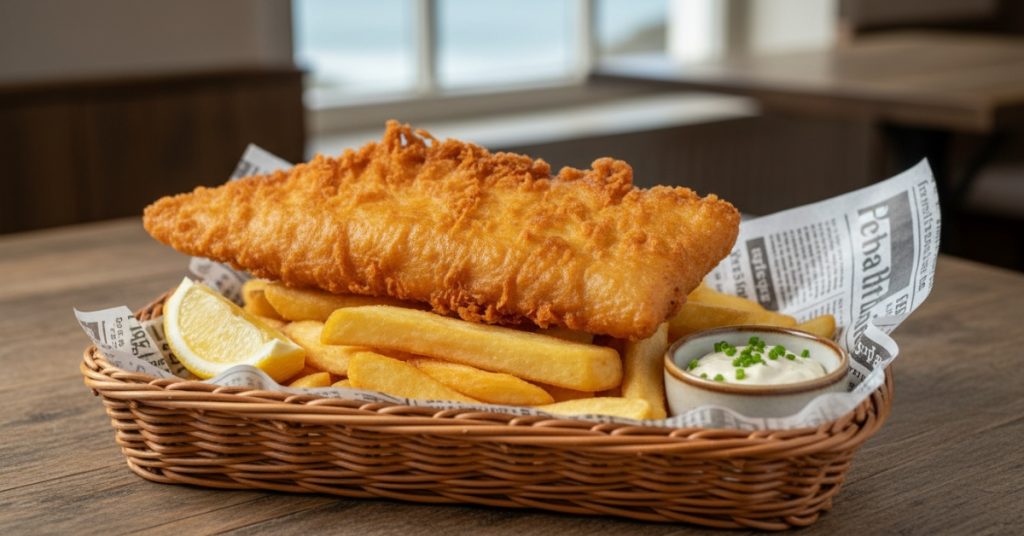
There are few dishes as iconic or universally loved as fish and chips. Its roots trace back to 19th-century Britain, where the combination of fried fish (introduced by Jewish refugees) and fried potatoes (a staple of the industrial north) merged to become a national treasure. But its appeal goes far beyond historical significance. The dish is a masterclass in texture and flavor balance, offering a sensory experience that is hard to replicate with other meals.
The magic lies in the contrast. The exterior of the fish should be encased in a golden, shattered-glass crispness that gives way to tender, steaming white meat. The batter acts as a protective cocoon, steaming the fish gently while the outside crisps up in the oil. This cooking method keeps the fish moist and flavorful, preventing it from drying out. Meanwhile, the chips—distinct from thin American fries—offer a substantial bite. They are crisp on the edges but pillowy and soft in the center, acting as the perfect vessel for salt and vinegar.
Comfort is another major factor in the dish’s enduring popularity. It is unpretentious food that warms you up. Whether eaten out of newspaper at the seaside or served on a plate with mushy peas, it satisfies a primal craving for carbohydrates and protein cooked in fat. The ingredients are humble—potatoes, flour, fish, and oil—yet when treated with care, they transform into something spectacular. This accessibility makes it a favorite for families and foodies alike, proving that you don’t need expensive ingredients to create a memorable meal.
Classic Fish and Chips Recipe (Step-by-Step)
Creating the perfect fish and chips requires attention to detail, particularly regarding temperature and timing. This recipe focuses on the traditional beer batter method, which ensures a light and airy crust.
Ingredients
For the Fish:
- Fish Fillets: 4 large pieces (about 1.5 lbs) of thick white fish like Cod, Haddock, or Pollock.
- Flour Dredge: ½ cup all-purpose flour mixed with salt and pepper.
- Oil: Vegetable, canola, or peanut oil for frying (enough to fill your pot 3-4 inches deep).
For the Beer Batter:
- All-Purpose Flour: 1 cup.
- Rice Flour: ½ cup (this helps create extra crispiness).
- Baking Powder: 1 teaspoon.
- Salt: 1 teaspoon.
- Beer: 1 cup of cold lager or ale (use sparkling water for a non-alcoholic version).
- Honey: 1 teaspoon (optional, helps with browning).
For the Chips:
- Potatoes: 4 large Russet or Yukon Gold potatoes.
- Salt: For seasoning immediately after frying.
Instructions
Step 1: Prepare the Chips
Peel your potatoes and cut them into thick batons, roughly ½ inch wide. Rinse them thoroughly under cold water to remove excess surface starch. Place the cut potatoes in a bowl of cold water and let them soak for at least 30 minutes. This step is crucial for ensuring the chips don’t brown too quickly before they are cooked through.
Step 2: Dry and Blanch (First Fry)
Drain the potatoes and pat them completely dry with paper towels. Moisture is the enemy of crispiness. Heat your oil in a heavy-bottomed pot or Dutch oven to 325°F (160°C). Carefully lower the chips into the oil in batches—do not overcrowd the pan. Fry for about 3-4 minutes until they are soft and pale, but not browned. Remove them with a slotted spoon and drain on a wire rack lined with paper towels. Turn off the heat briefly while you prep the fish.
Step 3: Prepare the Fish and Batter
Pat your fish fillets dry with paper towels. Season the flour dredge with salt and pepper, then lightly coat each fillet, shaking off any excess. In a large mixing bowl, whisk together the all-purpose flour, rice flour, baking powder, and salt. Just before you are ready to fry, whisk in the cold beer and honey until the batter is the consistency of heavy cream. A few lumps are fine; do not overmix.
Step 4: Fry the Fish
Increase the oil heat to 375°F (190°C). Dip a floured fish fillet into the batter, ensuring it is fully coated. Allow excess batter to drip off for a second, then carefully lay the fish into the hot oil away from you to prevent splashing. Fry 2 fillets at a time for 5-7 minutes, flipping halfway through, until the batter is a deep golden brown. Remove and drain on a wire rack.
Step 5: Finish the Chips (Second Fry)
Once the fish is done and keeping warm in a low oven (200°F), bring the oil back to 375°F (190°C). Add the blanched chips back into the oil. Fry for 2-3 minutes until they are golden brown and crispy. Remove, drain, and season immediately with salt.
Best Tips for Crispy Fish Batter & Perfectly Fried Chips
Achieving that restaurant-quality crunch involves a bit of food science. Understanding how ingredients interact with heat will elevate your cooking from “good” to “exceptional.”
Mastering the Batter
The temperature of your liquid is non-negotiable. Your beer or sparkling water must be ice cold. When the cold batter hits the hot oil, the thermal shock creates an immediate reaction that puffs up the batter, resulting in a lacework texture rather than a heavy, donut-like coating. If you want an even lighter batter, you can substitute a portion of the all-purpose flour with cornstarch or rice flour. These flours have less protein (gluten), which means the crust will be tender and shatteringly crisp rather than chewy.
The Importance of Oil Management
Temperature control is the most critical skill in deep frying. If the oil is too cool (under 350°F), the food will absorb the oil like a sponge, leading to a greasy, heavy meal. If the oil is too hot, the batter will burn before the fish inside is cooked. Use a candy thermometer or a digital probe to monitor the heat constantly. Between batches, wait for the oil to return to the correct temperature. Choosing the right oil matters, too; opt for oils with high smoke points like peanut, sunflower, or canola oil. Avoid olive oil, as it will smoke and impart a bitter flavor at high temperatures.
The Potato Secret: Double Frying
You might wonder why we fry the chips twice. The first fry at a lower temperature (blanching) cooks the interior of the potato, ensuring it is soft and fluffy. The cooling period between fries allows moisture to migrate to the surface. The second fry at a higher temperature drives off that moisture and crisps the exterior. If you try to do it all in one go, you will end up with chips that are burnt on the outside and raw in the middle, or cooked through but soggy.
Potato Selection
Not all potatoes are created equal. For chips, you need a high-starch potato like a Russet (Idaho) or a Maris Piper. Waxy potatoes, like red potatoes, have a high moisture content and low starch, which means they won’t get fluffy inside and tend to become limp quickly after frying. The starch is what allows the interior to break down into that desirable mash-like texture while the sugar on the exterior caramelizes into a golden crust.
Variations & Serving Ideas
While the classic version is hard to beat, there are plenty of ways to customize fish and chips to suit your palate or dietary needs.
Flavor Twists
You can easily modify the batter to add more depth. Adding a pinch of cayenne pepper or smoked paprika to the flour mixture gives the fish a subtle heat and a beautiful reddish hue. For a more aromatic version, try adding curry powder to the batter—a nod to the popularity of curry sauce in British chip shops. If you prefer a non-alcoholic version, club soda works perfectly well; the carbonation provides the same airy lift as beer.
Sauces and Sides
The traditional accompaniment is malt vinegar and salt, but the sauce options are endless.
- Tartar Sauce: A creamy mix of mayonnaise, capers, pickles, lemon juice, and fresh dill cuts through the richness of the fried fish.
- Mushy Peas: Sweet marrowfat peas simmered until they form a thick, green mash. They provide a sweet, earthy counterpoint to the salty fish.
- Curry Sauce: A mild, fruity curry sauce is excellent for dipping chips.
- Lemon Wedges: A squeeze of fresh lemon juice brightens the dish and reduces the feeling of oiliness.
Dietary Adjustments
For a gluten-free version, swap the wheat flour for a high-quality gluten-free all-purpose blend and use gluten-free beer or soda water. If you want to avoid deep frying entirely, you can bake the fish. Coat the fish in flour, egg wash, and panko breadcrumbs toasted with a little oil. Bake at 425°F for 12-15 minutes. It won’t have the same puffed batter texture, but it will be crisp and delicious.
Bring the Pub to Your Kitchen
Making classic fish and chips at home is a rewarding experience that demystifies deep frying. By following the double-fry method for the potatoes and keeping your batter ice-cold, you guarantee a meal that is superior to anything you can get from a delivery driver. It is a dish that brings people together, offering the warmth and comfort of a traditional pub meal right at your own dining table. Gather your ingredients, heat up the oil, and enjoy the satisfying crunch of homemade success.
Frequently Asked Questions
Can I bake the fish instead of frying?
Yes, you can bake the fish for a healthier alternative, though the texture will differ. To achieve a crunch without frying, coat the fish in toasted panko breadcrumbs rather than a wet batter and bake at 400°F (200°C) for 15-20 minutes.
What type of fish is best for fish and chips?
Firm, white fish such as Cod, Haddock, or Pollock are the best choices for this dish. These varieties have a mild flavor that pairs well with the batter, and their flaky texture holds up well against the high heat of frying.
How do I keep fried fish crispy?
Place the fried fish on a wire rack set over a baking sheet and keep it in a warm oven (around 200°F) while you finish frying. This allows air to circulate around the food, preventing steam from getting trapped underneath and making the batter soggy.
Can I make fish and chips in an air fryer?
Yes, you can use an air fryer, but you cannot use a wet beer batter as it will drip off the fish. Instead, use a flour, egg, and breadcrumb coating method, and air fry at 390°F for about 10-12 minutes, flipping halfway through.
How should I store leftovers?
Leftover fish and chips should be stored in an airtight container in the refrigerator for up to 2 days. To reheat, avoid the microwave; instead, place them in an oven or air fryer at 350°F until heated through to restore crispness.